Hey mamas! In this episode, I dive deep into our personal roller-coaster with my little one’s possible peanut allergy. From tiny marks on his skin to navigating hospital visits and meticulous medical checks, we’ve been on quite the journey! I chat about the importance of staying updated with the latest allergy research and finding a fantastic allergist who’s got your back. And guess what? There’s hope with treatments like oral immunotherapy! If you’re a parent facing the twists and turns of food allergies, or know someone who is, this episode is a warm hug and a friendly guide through the maze. Join me as we journey together! 💕🥜🎙️
Get the Table Talk Bundle and SAVE $100 on my picky eating course! Click here
Ready to try Picky Plates, click here to check it out!
Have you tried Daily Harvest? I am loving their smoothies! Click here and use my code NUTRITIONFORLITTLES for 40% off!
Breastfeeding Blueprint is helping moms navigate breastfeeding their babies! You can get $50 off their course when you use NFL50! Click here to learn more!
Hope this episode was helpful for you! If it was it would mean so much to me if you left a written review it only takes you a second but helps other mamas just like you!
Loving the podcast but looking for more?
Head over to my Instagram account @nutrition.for.littles where I drop almost daily content helping you change the mealtime environment in your home (make sure to watch my stories where I teach and explain in more detail!)
Also if you liked this episode share it with your friends and family because it really does take a village to raise kids and it helps when your village is all on the same page!
Positive food communication is not only vital for connecting with children but also for guiding them through the often tricky journey of food exploration. In today’s blog post, we’ll discuss three specific mistakes I hear parents make, mistakes that might unintentionally set children up for failure rather than success.
These mistakes aren’t just general errors; they’re specific expressions and questions that parents may inadvertently use, hampering positive food communication. By understanding these mistakes, we can foster success at the dinner table rather than setting our children up for failure.
Mistake 1: “Do you like it?”
For parents, asking “Do you like it?” is a supportive and loving question by nature. However, this innocent question, though well-intentioned, can create a pressure-filled environment that doesn’t promote positive food communication. Asking a child whether they like a food immediately after tasting it can lead to two problematic outcomes:
People-Pleasing Response: The child may say yes, even if they mean no, feeling trapped in that decision later.
Committing to a “No”: A firm no might close the door on future attempts to introduce the food.
Neither of these outcomes are what we want when battling picky eating. To avoid this “mistake,” practice intentional communication.
Long work days, endless chores, and picky eaters can seriously drain our parent brains. So, if being intentional about how you communicate about food at the dinner table is just too much to add to your plate, try not talking about food at all.
Why? Because it’s better to not say anything at all than to say the wrong thing.
Side note, there is a nuance to this I’d like to be clear on. This particular “mistake” doesn’t apply to every scenario. If you’re vacationing in Hawaii or traveling through Europe and trying new foods, it’s totally fine to ask if they’ve enjoyed that new experience. The advice I’m outlining here really applies to dinner table meals when you’re working with foods you’ve been trying to introduce for months.
Mistake 2: You’re going to get hungry.
Similar phrases include, “Your belly needs food!” and “You must be hungry!”
When it comes to eating and hunger, it’s common for parents to think we know everything about our children. In my own home, I’ve become so skilled at reading every eyebrow raise and smirk, I feel like a mind reader. However, I have to remind myself I’m not—and the same goes for you too.
As adults, even the closest person in our lives can’t tell us when we’re hungry and when we’re not. So, don’t try to do the same with your kids. Kids need to experience things for themselves. And when it comes to hunger, that means they have to learn how to cope, manage, and try things on their own.
The best thing you can do is teach your kids how to identify feelings of hunger and how to manage it within your family’s culture and eating routine. Positive food communication includes respecting their autonomy and helping them to figure these things out for themselves.
Mistake 3: “You loved this yesterday.”
Reminding kids of their past food preferences might seem helpful in the moment, but like mistake #1, it can corner them. Children in this position may feel pressured to eat the food when they don’t really want to or double down on their distaste in the moment and reject the food well into the future. What we’re trying to do here is help kids embrace food experimentation, not commit to certain foods for the next 18-years.
So what’s wrong with mentioning that they liked this food before? It goes just a tiny bit too far in terms of being helpful. The way to help kids tackle foods they’re experienced before is not to remind them about how they felt about it before. The best way to go about this is to help them identify the food in front of them, so they can recognize it for themselves.
One thing you can do to help them identify foods is practice transparency. That means you’re never sneaking food into their meals or trying to trick them into eating something new. If you do that, they won’t be able to identify it in the future. For example, if you hide spinach in their yummy fruit smoothie, they’ll have no idea they like spinach when it’s served to them again.
Instead, identify foods in front of them, before, during, and/or after they’re working with that food at the table or in the kitchen. This will help them recognize the food in the future, even when it’s presented differently, like in a smoothie versus a side dish.
The goal is to commit to experimentation. Maybe try grapefruit in a smoothie today, and slices tomorrow? Kids can experiment like this effectively when we’re telling them how they should respond. Now, this doesn’t mean you shouldn’t help them articulate their thoughts, it just means we don’t want to put them in a corner.
Final Thoughts
Positive food communication is more than merely avoiding certain phrases; it’s about creating a trusting, nurturing environment that allows children to explore their culinary world. The three common mistakes discussed here are not definitive indicators of parenting failure but opportunities for growth and connection.
By embracing positive food communication, parents can build a stronger, healthier relationship with their children around food. With empathy, patience, and intentional communication, this journey can become a joyous family experience that fosters lifelong healthy eating habits.
Let’s address the elephant in the room—dealing with a picky eater. When my oldest turned into a picky toddler, our meal times spun into chaos. It felt like a control issue I couldn’t navigate out of, leaving me scared and anxious.
We all know how pivotal nutritious food is for our children’s growth, and the last thing we want is for meals to become a battleground. We should be creating heart-warming memories, discussing our days, and sharing laughter, not engaging in a tug-of-war over veggies.
Funny enough, in my journey to becoming a dietitian, we covered picky eating in just one week.
I thought I had it all figured out, but when faced with a picky eater under my own roof, I realized how little I actually knew. So, I returned to the books and began building evidence-based strategies.
Today, I’m sharing five things I’d start doing today if I found myself in the picky eating predicament again.
1. Invite the kids into the kitchen
Don’t get me wrong; this doesn’t mean having your little one prepare a three-course meal from scratch with you. But, it does mean involving them in the cooking process, even if it’s just observing.
Children are innately curious, and the kitchen is an extraordinary place for them to learn about food. Simple tasks like stirring ingredients, turning on the oven under supervision, or brushing the veggies with oil before roasting can do wonders.
Involving your kids in the kitchen doesn’t require them to be of a certain age. If your child is still in a highchair, move it into the kitchen. If they’re older, a step stool will do the trick.
What if they resist? Never force them, but gently entice them into joining you. Make tasks fun; instead of washing blueberries, ask if they’d like to give them a “bath”.
The goal isn’t perfection but making them more comfortable with food. The carrots might not be evenly chopped, but hey, they helped, didn’t they?
2. Make food fun
Many people find it rude to play with your food. And often, I hear from parents that their partner doesn’t allow food play at the table. I understand, but within reasonable boundaries, food play is an incredible way for kids to connect with their food.
Food play could be crafting a carrot castle or turning roasted potatoes into mashed potatoes on their plate–the idea is to let them interact with the food. Through play, they understand how food behaves, how it feels, and this can pave the way for accepting it into their diet.
3. Keep Foods They Don’t Eat ON the Menu
It’s all too easy to fall into the habit of not serving certain foods because your child won’t eat them.
Sure, we worry about food waste and the drain on our wallets, but if we give up on serving broccoli just because it sat untouched once, we deny our children the chance to learn to enjoy it.
Children depend on us to introduce them to a world of flavors. If they don’t see broccoli on their plate for months, they certainly won’t request it. Challenge your instincts to stop serving ‘rejected’ foods, and surprise your child with a varied plate.
After all, when was the last time your little one caught you off-guard, for better or worse? Maybe it’s time to give broccoli another shot!
4. Say ‘Yes’ to Sensory Experiences
As a new parent, I felt guilty for hating the idea of setting up elaborate sensory bins, as I saw on social media. It felt like a drain on my time, energy, and resources, not to mention the ensuing mess.
Thankfully, I soon realized that sensory experiences are all around us. It’s not about investing in fancy sensory bins but about allowing them to experience the world with all their senses.
Sensory experiences can be as simple as walking barefoot on the grass, feeding animals at the zoo, counting money, feeling the stickiness of peanut butter on their tongue, or snapping the asparagus before dinner.
These experiences help them get comfortable with various textures, tastes, and smells, proving beneficial in accepting different foods.
5. Enjoy Meal Times Together
Prioritize sharing meals with your children as often as possible.
I know, after a hectic day, it’s tempting to feed them first and then unwind with your meal. But if you’re dealing with a picky eater, try to demonstrate how you enjoy various foods, especially those they’re reluctant to try.
Seeing you relish that broccoli might not inspire them to try it immediately, but it sends a powerful message—”Mommy likes it. Maybe it’s not so bad!”
Combating picky eating can feel like an uphill battle, but with persistence, creativity, and an evidence-based approach, progress is within reach.
Remember, it’s not about winning every mealtime skirmish but about setting the stage for a lifelong positive relationship with food. For additional support and guidance, check out my Table Talk Course. You’ll feel confident you’re on your way to reversing picky eating for good.
My 3rd baby has started solids, these are all my best tips and tricks when it comes to feeding babies solids!
Ready to try Picky Plates, click here to check it out!
Have you tried Daily Harvest? I am loving their smoothies! Click here and use my code NUTRITIONFORLITTLES for 40% off!
Breastfeeding Blueprint is helping moms navigate breastfeeding their babies! You can get $50 off their course when you use NFL50! Click here to learn more!
Hope this episode was helpful for you! If it was it would mean so much to me if you left a written review it only takes you a second but helps other mamas just like you!
Loving the podcast but looking for more?
Head over to my Instagram account @nutrition.for.littles where I drop almost daily content helping you change the mealtime environment in your home (make sure to watch my stories where I teach and explain in more detail!)
Also if you liked this episode share it with your friends and family because it really does take a village to raise kids and it helps when your village is all on the same page!
These are the 3 things I hear parents of picky eaters making, these are things they are saying to their kids that set them up for failure instead of success.
Ready to try Picky Plates, click here to check it out!
Breastfeeding Blueprint is helping moms navigate breastfeeding their babies! You can get $50 off their course when you use NFL50! Click here to learn more!
Hope this episode was helpful for you! If it was it would mean so much to me if you left a written review it only takes you a second but helps other mamas just like you!
Loving the podcast but looking for more?
Head over to my Instagram account @nutrition.for.littles where I drop almost daily content helping you change the mealtime environment in your home (make sure to watch my stories where I teach and explain in more detail!)
Also if you liked this episode share it with your friends and family because it really does take a village to raise kids and it helps when your village is all on the same page!
I am talking about the mental load of grocery shopping and feeding your family. It can be a really heavy load to make all those decisions. I give you tips on how to ease this mental load. This is a big reason why I create Picky Plates, click here to check it out!
Ready to learn about my Table Talk program? Click here to learn more and enroll!
Want to try Dino Bars for yourself? Grab a pack by clicking here and use code Alyssa10 for 10% off.
Hope this episode was helpful for you! If it was it would mean so much to me if you left a written review it only takes you a second but helps other mamas just like you!
Loving the podcast but looking for more?
Head over to my Instagram account @nutrition.for.littles where I drop almost daily content helping you change the mealtime environment in your home (make sure to watch my stories where I teach and explain in more detail!)
Also if you liked this episode share it with your friends and family because it really does take a village to raise kids and it helps when your village is all on the same page!
It truly makes my mornings brighter and happier when I use this syrup and knowing I made it myself makes me feel like I have superpowers even though it’s super easy.
So take that Starbucks —- I don’t need you! (but also don’t hold this against me, I’ll be back)
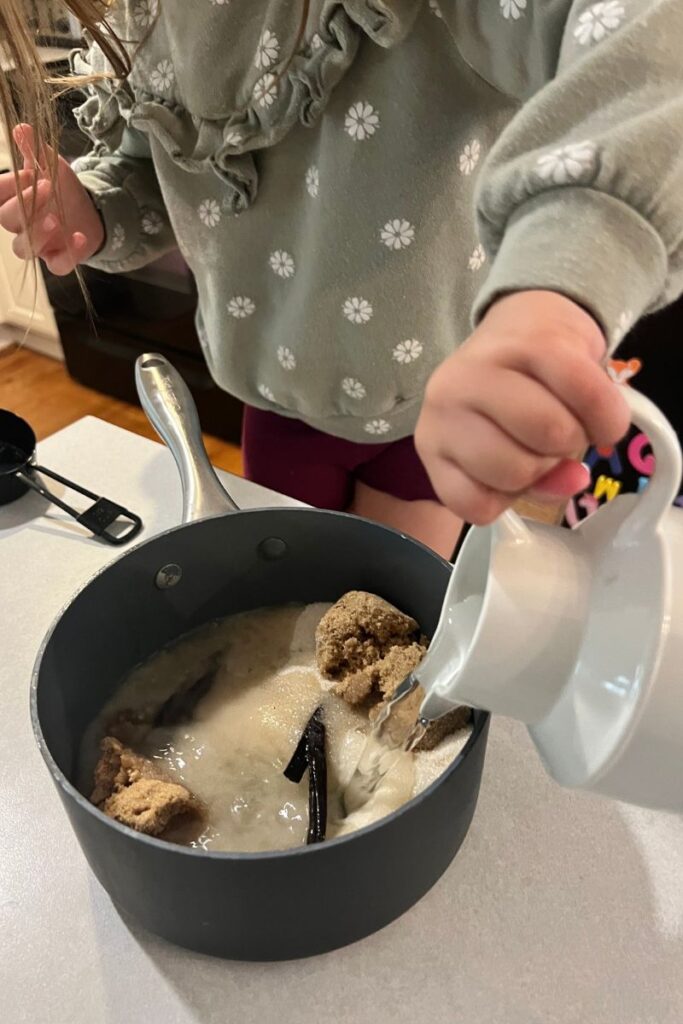
Alright my syrup ran out yesterday so that means I HAD to make it today so I figured I’d document it and bring you along with me so you can make some at home too!
Bonus little hands can totally help with this recipe!
Let’s do this…
Ingredients:
1 vanilla bean sliced down the middle to expose the seeds
2 cups water
1.5 cups sugar
.5 cups brown sugar
1 Tbsp vanilla extract (optional)
Directions:
Mix water, sugars, and vanilla bean in a small pot. Bring to a boil then simmer for 5-7 minutes until thickened and sugar has dissolved. Remove the vanilla bean pod and pour into a mason jar. Enjoy with coffee or mix into other beverages to make your life more enjoyable.
This syrup should last about one month in the fridge.
I love to use my leftover vanilla beans when my homemade vanilla runs out. Blog on that coming soon!
Do you ever feel stuck? Like you keep struggling with the same problem over and over again and you don’t know where to go to get help. Or you may not have the capacity right now to do something about it and that’s okay too.
Ready to learn about my Table Talk program? Click here to learn more and enroll!
Breastfeeding Blueprint is helping moms navigate breastfeeding their babies! You can get $50 off their course when you use NFL50! Click here to learn more!
Hope this episode was helpful for you! If it was it would mean so much to me if you left a written review it only takes you a second but helps other mamas just like you!
Loving the podcast but looking for more?
Head over to my Instagram account @nutrition.for.littles where I drop almost daily content helping you change the mealtime environment in your home (make sure to watch my stories where I teach and explain in more detail!)
Also if you liked this episode share it with your friends and family because it really does take a village to raise kids and it helps when your village is all on the same page!
These 3 phrases have connected me and my child around food! We still use these phrases with our kids!
Ready to learn about my Table Talk program? Click here to learn more and enroll!
Want to try Wild Pastures? Click here to get 20% off your entire order for life, plus $15 off your first box!
Hope this episode was helpful for you! If it was it would mean so much to me if you left a written review it only takes you a second but helps other mamas just like you!
Loving the podcast but looking for more?
Head over to my Instagram account @nutrition.for.littles where I drop almost daily content helping you change the mealtime environment in your home (make sure to watch my stories where I teach and explain in more detail!)
Also if you liked this episode share it with your friends and family because it really does take a village to raise kids and it helps when your village is all on the same page!